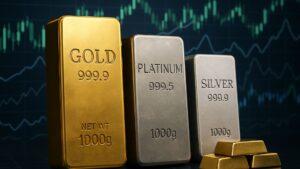


Dubai Precious Metals Conference Cites Interest Rate Fluctuation as Silver and Gold Price Impetus

Describing the potential for higher interest rates as “the real black swan event” to occur after the advent of US presidential elections, Dr. Paul Walker believes that investor’s precious metals enthusiasm is waning. A consultant at GFMS Thomason Reuters, Dr. Walker is decidedly bearish on the future of precious metals valuations. Other keynote speakers also echoed the sentiment, although a potential bond market collapse would be likely to send those same investors running to safe haven investments.

Bullish speakers contended that the rapidly expanding economies of India and China would continue their surging precious metal consumption, thereby cancelling the potential investor demand deficit of developed countries. With inflation threatening to outrun the cost of cash, precious metals still appear to be a good investment.

Sky-rocketing precious metals prices have been greatly influenced by negative real interest rates in the years following the “Great Recession.” QE3 is still not out of sight, but out of mind, at least for now.

http://www.arabianmoney.net/gold-silver/2012/04/30/4000-gold-and-100-silver-or-lower-bullion-prices-and-20-silver-asks-inagural-dmcc-precious-metals-conference/

Have Those Who Failed to Invest in Precious Metals Missed the Boat?

With gold and silver portfolio gains approaching eighty percent in the last four years, many previously skittish investors are still sitting on the sidelines. In comparison, stock and bond investors, even savvy ones, like Warren Buffett, have mostly flat-lined over the last few years.

Observation of cautious precious metals buyers may cue those who already own silver and gold to sell. The resulting dip could create an additional upswing in precious metals valuations.

By all indications, there is still a potential upside in precious metals. World debt crises continue, and central banks still own precious metals as a hedge against poor planning and imprudent fiscal decisions.

Regular investors know that rapid, steep climbs could signal the end of any bull market bubble. However, precious metals, silver, in particular, continue their lateral movements. Silver and gold are still a safe buy, taking into account these time-tried market signals. There is still time to take advantage of precious metal’s slow upward momentum.

http://goldsilver.com/news/why-do-new-investors-always-take-such-a-short-term-view-on-gold-and-silver/

China May Dominate Precious Metals Markets in the Coming Years

This week, Shanghai, China becomes a new market for silver futures trading. China is already a major global gold market player. Many believe that Chinese influence may even put a damper on silver’s well-known price volatility, and devise an end to perceived COMEX silver market manipulation. This belief is grounded in knowledge of China’s handling of the gold market, which is known to be a significant international driver of gold prices.

The significantly smaller silver market could see substantial impact from China’s accelerated industrial and retail silver consumption in the near future. COMEX short sellers of silver may liquidate these positions, in anticipation of sinking prices due to Chinese precious metals market activities.

Chinese fabrication and investment demand has already made China into a net silver importer. Currently standing behind Mexico and Peru in silver production, China may be the largest global silver consumer. Although the belief that China may have more than a decade’s stockpile, their appetite for silver is currently growing by double digits.

http://www.silverbearcafe.com/private/05.12/chinaroad.html

Silver Catalyst May Eventually Replace Chlorine for Water Purification Use

Pool water and drinking water have been purified with ionic silver for many years. Silver is well known to provide effective treatment against the growth of bacteria, and other harmful organisms. Most water purifiers sold in the United States contain some form of silver. These products are designed to eliminate chlorine, lead and other particulates, bacteria, odor and trihalomethanes from drinking water. The build up of bacteria and algae are also diminished by use of silver in water filtration.

More than fifty percent of money spent annually on consumer water purification systems, is used for obtaining water purifying methods that employ silver in their processes. Recent research shows promise for a new sanitizing catalyst, produced from the combination of silver and oxygen. Expectations are high for the silver catalyst, which could replace chlorine for many water purification uses. This catalyst may be preferred over chlorinated compounds, since it does not display the harsh chemical and corrosive effects of chlorine.

http://www.silverstrategies.com/story.aspx?local=1&id=17636

Silver Occurence and Mining Methods

The rarity of silver is expressed by its occurrence in igneous rock of just 0.07 parts per million. The potential of a silver deposit is evaluated by determining the amount of metal it contains. Silver is rarely found alone in mineral ores. Copper, manganese, iron, lead and zinc are metals commonly found in silver-containing ore. This complicates silver mining economics, because the presence of other metals will also affect the value of the deposit.

Methods employed to mine silver include both underground and open-pit procedures. Determination of the method to be used is based upon whether it is most likely to glean the largest amount ore from the deposit. Sometimes both methods are used in the same area.

Silver-containing ores are first mined, and then processed by crushing and grinding. The resulting composite can be separated by mechanical or chemical means. Most silver ores are classified as sulfides, which may be easily separated by flotation.

http://silverinvestingnews.com/investing-in-silver/what-makes-a-world-class-sivler-deposit